The Real Return on Investing in an Interior Designer

Why people hesitate

I get it. Hiring an interior designer feels like a big investment. A lot of people think, “I can just do this myself — pick a sofa, choose a paint colour, order some bits online.” And sometimes you can.

But what most people don’t see is the cost of getting it wrong. The sofa that doesn’t fit the space. The kitchen layout that doesn’t work once you’re actually cooking in it. The time and money wasted on deliveries, returns, and stress.

What you’re really investing in

When you hire a designer, you’re not paying for someone to pick cushions. You’re paying for:

  • Clarity. No more second-guessing every decision.

  • Flow. Layouts that work for real life, not just Instagram photos.

  • Ease. You don’t chase trades, deliveries, or stock issues.

  • Vision. A home that feels whole — not a collection of random purchases.

The emotional return

The value of design isn’t just financial. It’s waking up in a space that makes you feel grounded. It’s having a home that calms you instead of stressing you. It’s knowing your environment reflects you at your best.

That emotional return? You can’t put a number on it. But you feel it every single day.

The practical return

Design also saves money in the long run. You’re not replacing poor-quality furniture every few years. You’re not repainting walls because the colour feels wrong. You’re not buying “filler” pieces just to make a room look finished.

One clear vision, done properly, always costs less than trial and error.

The bottom line

So, is hiring an interior designer worth it? If you want a home that’s more than “nice” — one that’s lasting, personal, and quietly iconic — then yes. The return goes far beyond the fee.

The art of feeling before you know why

There’s a moment, before any sketch is drawn or sample ordered, when something stirs inside. A flicker of possibility that you don’t yet understand. That’s where design begins. Not with the blueprint, not with the sofa swatch, with feeling.

Feeling first, logic later

Most people expect design to start with logic, layouts, measurements, furniture choices. I’ve learned differently. The most meaningful interiors begin with something you don’t yet know the name of, a mood, a memory, a tension waiting to soften.
When I trust that stir, the space becomes honest, the room hums. You can feel it, even if you can’t yet read it.

Why this matters

In an age of perfection driven Instagram shots and cookie-cutter styling, the rooms that last are the ones built from a deeper place. Because when a home begins in feeling:

  • It carries memory not just design.

  • It moves beyond “nice” to become felt.

  • It lets the owner live — not just look good in.

How I bring it into the process

Here’s how I translate that moment of feeling into a finished space:

  1. I listen. I ask: What did you love growing up? What made you feel safe or alive?

  2. I test textures, tones, and materials until one quietly settles.

  3. I allow the layout to reflect not only how you live but how you feel.

  4. I build around the thing you felt first, even if you couldn’t yet name it.

The result

When you walk into a space that began this way, you don’t notice the symmetry. You notice the stillness, the breath you didn’t know you held, the light that hits just right in the evening, that’s what I aim for.

Design isn’t just aesthetics. It’s how you feel when you walk into the room. When you begin with feeling, you give the home its first truth.

Amy’s Edit x Vinterior: If I Curated a Drop, This Would Be It

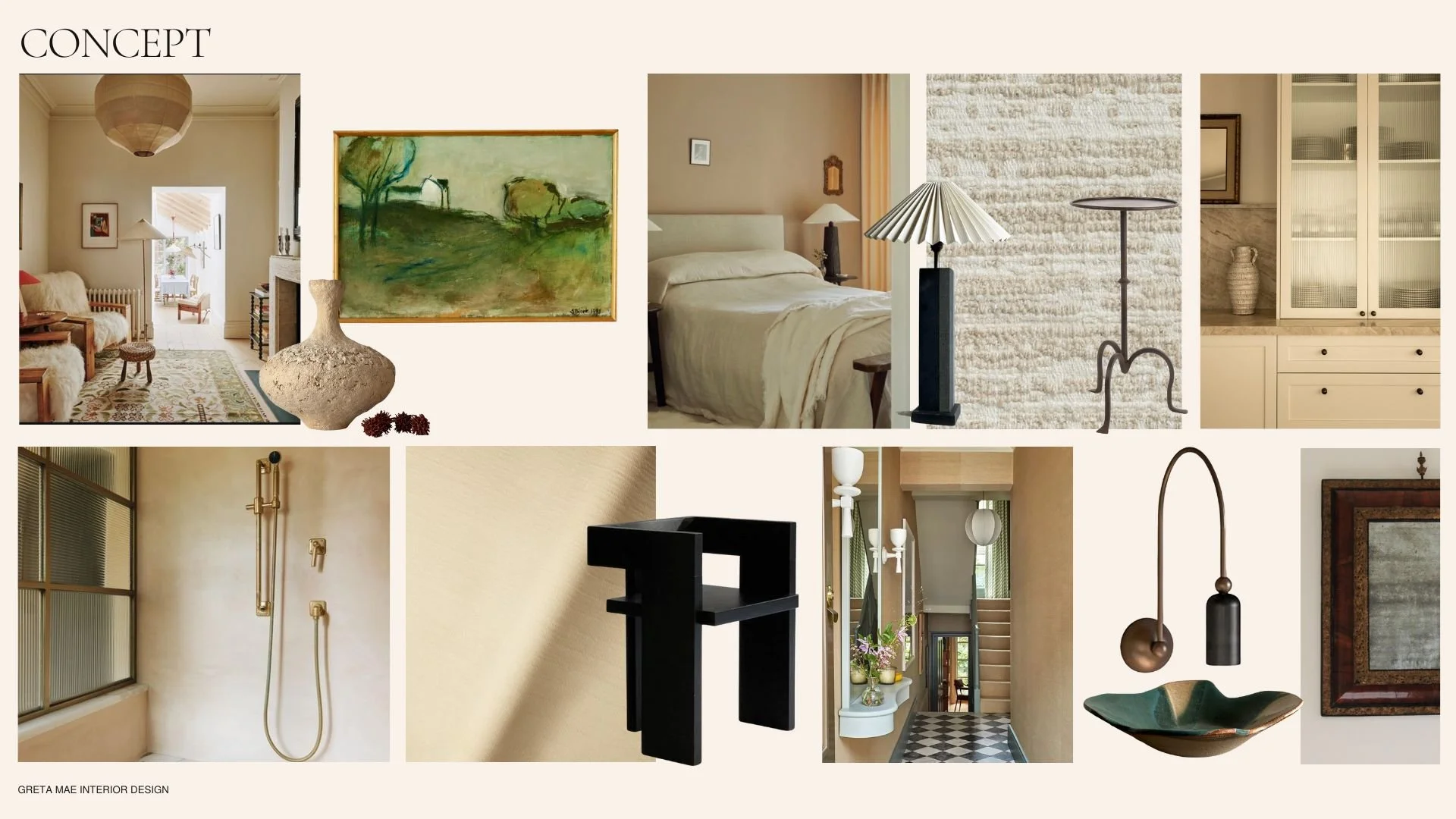
If I had my own Vinterior drop, this is exactly what it would look like: soulful, layered, quietly powerful. Every piece chosen not just for its aesthetic, but for the feeling it evokes. This is vintage curation through the lens of Unseen Doesn’t Mean Unfelt. Not just pretty pieces to fill a space, but the pieces that stop you in your tracks, anchor a room, and leave you thinking about them long after.

This is what I’d put in your home if you gave me the keys.

Statement Seating

Not just a place to perch. These are the kinds of chairs and sofas that bring weight and soul to a room. Slouchy velvet, aged leather, sculptural forms that somehow manage to feel both quiet and bold. The kind of piece you build a room around.

"You don’t just sit in these, you arrive."

Lighting with Soul

This is where I get emotional. Lighting is everything. And vintage lighting? That’s emotional architecture. Think pleated silk, heavy brass, smoked glass, the stuff that casts a glow rather than just illuminating a space. These are the pieces that shift a room from fine to unforgettable.

"Switch the light on, shift the frequency."

Pieces with Past Lives

Old marble. Dented wood. A patina that tells you it’s been loved. These pieces don’t need to shout to hold presence. They’re the grounding force in a room, the ones that let everything else breathe.

"They don’t just sit there. They hold history."

The Unexpected

This is where curation becomes art. A brutalist side table. A ceramic vessel with a warped lip. Something odd that you can’t stop thinking about. It doesn’t match anything, which is exactly why it belongs.

"You need a little tension. A little risk. That’s what makes it memorable."

If this were real, it would sell out.

But for now, I’m sharing it here, a glimpse into how I see, choose, and layer.

Because this is what Amy’s Edit looks like when it plays with Vinterior.

And maybe one day soon… it won’t just be a wishlist.